BREAKING: Chaos Erupts in Formula 1 as Lewis Hamilton’s Explosive Remarks Are Followed by the FIA’s ‘Worst News’ Announcement

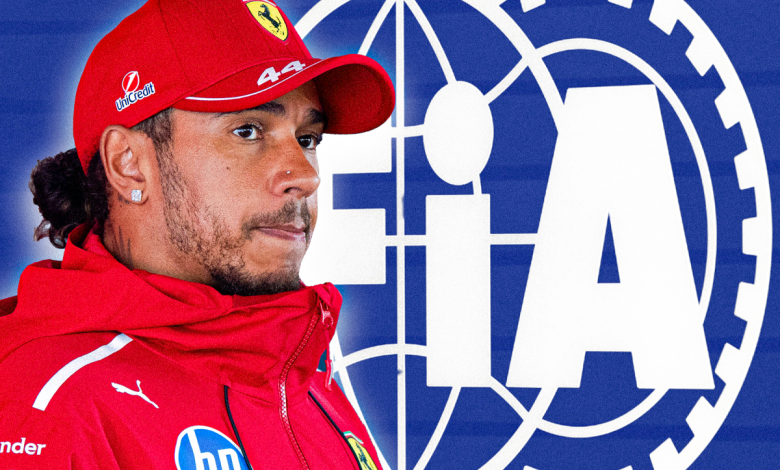
BREAKING: Chaos Erupts in Formula 1 as Lewis Hamilton’s Explosive Remarks Are Followed by the FIA’s ‘Worst News’ Announcement
The FIA have responded to constant criticism from drivers such as Lewis Hamilton and Max Verstappen over the F1 2026 regulations, claiming manufacturers were reluctant to take up the offer of implementing changes earlier.
Even before the F1 season opener had taken place in 2026, it was clear the new chassis and power unit regulations were going to be highly contentious.
At pre-season testing alone, Verstappen said the new rules made F1 feel like, ‘Formula E on steroids,’ whilst Hamilton warned: “It’s like you need a degree to fully understand it all.”
The complaints failed to die down once the championship got underway so in May, F1 and its governing body reacted by introducing emergency energy management measures from the Miami Grand Prix onwards.
The following month, the FIA outlined a roadmap to reach a 60/40 engine split by 2028 which aims to rebalance the Internal Combustion Engine and Energy Recovery System contribution in stages across the 2027 and 2028 championships.
F1 HEADLINES: Verstappen to Aston Martin, Mercedes cost cap fears and Sky F1’s uncertain future
FIA clap back after Hamilton’s ‘job’ comment
Even with these changes on the horizon, complaints have continued across the grid after the energy management issues were exacerbated by the track layout at classic circuits like Spa prior to the summer break.
Former F1 racer turned Sky Sports legend Martin Brundle said ahead of this year’s Belgian GP that he had a ‘tear in his eye’ due to what the new regulations had done to some of the most iconic tracks on the calendar.
We’ve lost all the great corners at Silverstone, and here we are at Spa with the same situation,” said the British pundit live on Sky Sports F1.
That same weekend, Grand Prix Drivers’ Association director Carlos Sainz said: “Whoever saw these simulations in 2022, 2023 and didn’t look at it and say, ‘how can we even accept that?’ needs to review what happened there because it should have never happened.”
When Sainz’s comments were presented to Hamilton, the seven-time champion agreed, adding: “I don’t know who made the decision, but whoever it is, they’ve still got their job.”
FIA claim F1 manufacturers rejected chance to change 2026 rules
Now, the FIA’s single seater director Nikolas Tombazis has said that he knew it would be tricky to please the drivers, but that the governing body’s hands were tied over introducing rule tweaks in advance due to the power unit manufacturers failing to come to an agreement over them.
In quotes reported by The Race, Tombazis addressed the deluge of criticism heard from F1 drivers so far this year, saying: “I think drivers are, by definition, quite demanding clients. So I don’t think we expect them to have a sugar coat or to not speak their mind.
“We did anticipate a lot of these things they have complained about in the two years before the launch of the season, and we did try to make some adjustments.
“But we failed with the governance that was in place. So I think it was realistically only to be expected.”
At the time, major F1 rule tweaks had to receive backing from the FIA, FOM and four of the five manufacturers in order to be passed.
Tombazis maintained that this was a necessary rule in order to keep things equal between old and new PU providers, but that it ultimately led to the governing body having to compromise.
“If a PU manufacturer who was not participating in F1, let’s say Audi for example, they still had to be bound by regulations.
“They could not come to us and say, ‘well, you know we’re not participating, hence we can spend five times the money, for example’. That would have been unfair.
“So that’s why there was a governance agreement that, on the one hand, forced them to be bound by the regulations, including the financial and operational, and all of that.
“But on the other hand, it puts limitations as to how much we can change things unilaterally as the FIA.
“Therefore any change had to be approved by a significant number of the PU manufacturers, and so for the sort of changes we did, we needed at least four of them to agree.
“Quite simply, four of them did not agree during the years when we discussed adjustments.”
Tombazis then suggested the FIA were ready to bring about changes earlier, adding: “I think it’s a bit of a shame that we had to wait until then. We discussed things in May to get the package for ’27 and for ’28.
“I think we could have ideally done that a couple of years before, and then there wouldn’t have been all of this discussion.”