💥🔥“SHE DESERVES THE WORLD ON HER KNEES” — Tennis legend Andy Murray roared unexpectedly in the midst of a storm, pointing directly at those trying to bury Emma Raducanu: “THIS ISN’T JUSTICE, IT’S MURDER IN THE TENNIS WORLD!” A 22-year-old prodigy — carrying the dreams of an entire new generation — was once again betrayed, crushed, and pushed into the shadows by the very people who once applauded her. In the blink of an eye, Andy Murray dropped 12 cutting words that sent the tennis world into a nightmare set to last for years

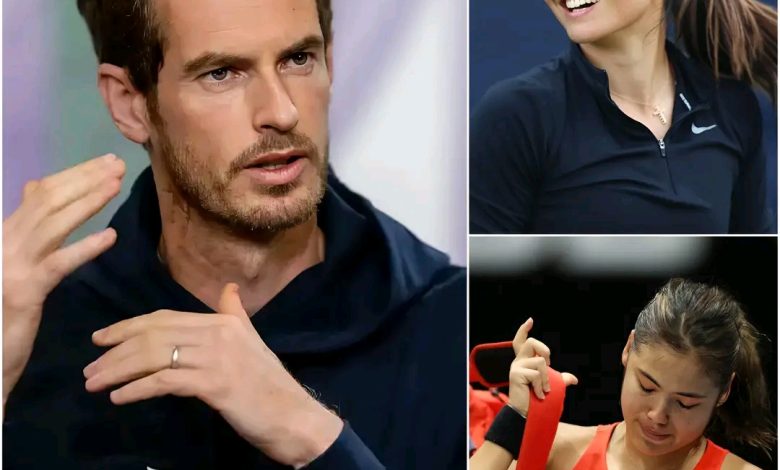
In a shocking turn of events in the tennis world, Andy Murray publicly defended rising star Emma Raducanu during an unexpected media storm. “She deserves the world on her knees,” Murray exclaimed, directing his anger toward critics and detractors attempting to undermine the young British talent.
“This isn’t justice, it’s murder in the tennis world!” His impassioned statement sent shockwaves across the tennis community, reminding everyone of the harsh pressures faced by young players in the elite professional circuit.
Emma Raducanu, at just 22 years old, carries the aspirations of an entire generation of tennis fans and aspiring athletes. Despite her historic wins and growing reputation, she has recently faced a wave of criticism and scrutiny, some of which has bordered on personal attacks.
Murray’s intervention highlighted the injustice of the situation, emphasizing that public figures must protect emerging talent rather than tear them down.
The twelve cutting words from Murray — delivered with intensity and conviction — left the tennis world stunned. Analysts and fans alike noted the rare ferocity in his tone, a mix of anger and protective instinct.
For many, it was a reminder that tennis legends often take it upon themselves to shield younger players from unnecessary scrutiny and media pressure, a tradition of mentorship that Murray has long upheld.
Social media exploded following Murray’s statements. Hashtags supporting Raducanu and condemning the critics quickly trended worldwide. Fans praised Murray for his courage in speaking out, while debates erupted about fairness, media treatment of young athletes, and the systemic pressures within professional tennis.
Many commentators agreed that Murray’s words were a call for the tennis world to reevaluate its treatment of its emerging stars.
Raducanu’s recent challenges reflect the intense spotlight young athletes face. Every misstep on and off the court is magnified by global media coverage, often creating an atmosphere of relentless pressure.
Murray’s defense underscored that criticism should focus on performance, not personal attacks, highlighting the need for empathy and respect toward athletes navigating their early professional years.
Former champions and tennis analysts weighed in, acknowledging the bravery in Murray’s statement. Some noted that Raducanu’s experiences mirror those of other young athletes, who often find themselves vilified after early success.
Murray’s words serve as both a warning and a protective gesture, reminding the world that mental health and personal well-being are just as important as physical performance in sport.
The twelve words Murray delivered carried a dual message: defending Raducanu while issuing a critique of the tennis establishment.
By calling out the unfair treatment, Murray spotlighted systemic issues in professional tennis, including media exploitation and the tendency of audiences to elevate athletes only to harshly criticize them at the first sign of struggle.
Emma Raducanu’s response to Murray’s defense has been one of quiet resilience. Although she has not commented extensively publicly, insiders suggest that Murray’s support has provided her with renewed confidence.
The recognition from a veteran and tennis icon offers validation for her talent, reminding her that she is not alone amidst criticism and that her contributions to the sport are valued and respected.
Fans around the world have expressed solidarity with Raducanu, sharing Murray’s quote across social platforms. Influencers, former players, and sports journalists joined the conversation, emphasizing the importance of positive reinforcement in the careers of young athletes.
The global reaction underscores how influential veteran voices can be in shaping both public perception and player morale.
Murray’s intervention also sparked debate regarding the role of media in sports. Critics argue that sensationalist coverage contributes to mental health pressures for young athletes.
Murray’s condemnation of such treatment serves as a challenge to journalists and commentators: to respect athletes’ personal boundaries and avoid excessive scrutiny, particularly when it risks the well-being of players like Raducanu.
The tennis community, from coaches to tournament organizers, has taken note. Many emphasize the importance of mentoring programs and psychological support for emerging players. Murray’s statement aligns with broader initiatives to create safer, more supportive environments for young athletes navigating the intense world of professional tennis.
Observers have highlighted that Raducanu’s situation is not unique but emblematic of a recurring pattern in tennis. Young talents frequently face scrutiny that can undermine their confidence and growth.
Murray’s intervention is therefore seen as a pivotal moment, where a respected figure publicly challenges the status quo, advocating for fairness, respect, and the protection of mental health.
In interviews following the incident, other players expressed agreement with Murray’s sentiment. Many acknowledged that while competition is fierce, the culture surrounding young athletes can sometimes cross into hostility.
The tennis community’s reflection on these dynamics may lead to stronger support systems, clearer boundaries with media, and a renewed focus on mentorship within professional sport.
Analysts note that Murray’s defense of Raducanu could have lasting influence on her career trajectory. Support from a figure of his stature not only boosts confidence but also signals to critics that undue negativity will not be ignored.
Such public endorsements can alter the narrative around young athletes, encouraging fans and media to approach them with more nuance and understanding.
Murray’s words also resonate beyond tennis. They reflect a broader societal discussion about fairness, respect, and the treatment of young individuals in high-pressure professions. By using his platform to defend Raducanu, Murray reminds the public of the ethical responsibility inherent in celebrating success without condoning harassment or unfair criticism.
The response from tennis federations and tournament organizers has been cautious but supportive. While official statements are measured, the incident highlights an ongoing need for policies addressing player well-being, particularly for rising stars.
Murray’s public stance accelerates this conversation, potentially prompting reforms that prioritize mental health, mentorship, and constructive feedback over sensationalism.
Fans have praised Murray not only for his defense of Raducanu but also for his courage in speaking truth to power. Veteran athletes often serve as role models, and Murray’s words demonstrate leadership that extends beyond technical skill or tournament wins.
His intervention reminds younger players and the public that standing up against injustice is as important as any victory on the court.
Raducanu’s journey now gains an added layer of support and inspiration. Murray’s words act as a shield against unfair criticism and a beacon of encouragement, reaffirming that her achievements, perseverance, and potential are valued. The tennis world has witnessed a moment where advocacy, empathy, and professional solidarity intersected powerfully.
The twelve-word outburst from Murray will likely be remembered as a defining moment of support in modern tennis history. Beyond its immediate impact, it reinforces the significance of mentorship, the influence of veteran voices, and the need to protect young athletes from unnecessary harm.
Raducanu’s story, coupled with Murray’s intervention, will remain a reference point for discussions on fairness and ethics in the sport.
In conclusion, Andy Murray’s defense of Emma Raducanu amidst harsh criticism has sparked a major conversation in the tennis world.
His passionate words, “She deserves the world on her knees… This isn’t justice, it’s murder in the tennis world!” not only challenge unfair treatment but also inspire solidarity, empathy, and systemic reflection.
For Raducanu, this support strengthens her resolve and underscores the enduring importance of mentorship, respect, and protection in elite sports.