

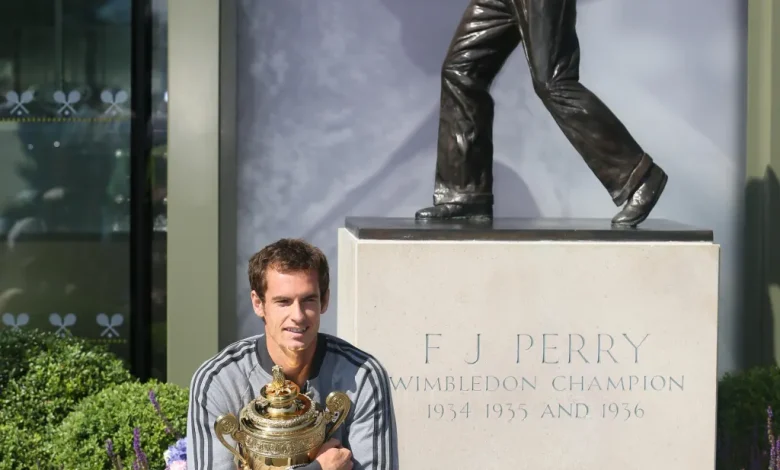
Andy Murray didn’t just win matches — he redefined what greatness looks like when talent meets suffering, resilience, and relentless honesty. In an era dominated by giants, Murray carved a legacy that cannot be measured solely by trophies, but by the courage it took to keep standing when the odds, the body, and history itself said stop.
Greatness Born Against the Current
Murray’s rise unfolded during the most unforgiving period in men’s tennis history. Competing against multiple all-time greats, he faced a reality few champions ever encounter: playing peak tennis and still being told it wasn’t enough.
Yet he persisted.
Three Grand Slam titles.
Two Olympic gold medals.
A Davis Cup triumph for Great Britain.
World No. 1 — earned, not gifted.
These weren’t moments of dominance handed to him by circumstance. They were victories wrestled from the strongest field the sport has ever known.
The Champion Who Refused the Easy Exit
What truly elevates Murray’s greatness is not what he won — but what he endured.
Chronic injury threatened to end not just his career, but his quality of life. There were moments when walking pain-free felt uncertain, when retirement seemed inevitable, when even hope became exhausting.
And yet, he returned.
Not chasing glory.
Not chasing rankings.
But chasing dignity — the right to finish on his own terms.
That refusal to disappear quietly is greatness in its rawest form.
Emotion as Strength, Not Weakness
Andy Murray cried. He doubted. He spoke openly about pain, pressure, and mental strain — at a time when male athletes were expected to stay silent.
In doing so, he changed the culture.
He showed that strength is not emotional numbness.
That vulnerability does not weaken competition.
That honesty can coexist with excellence.
Murray didn’t just win for himself — he gave permission for others to be human.
A Legacy Bigger Than Numbers
Statistics will always matter. But Murray’s legacy lives beyond numbers because he stood as proof that greatness isn’t always effortless or elegant.
Sometimes it limps.
Sometimes it hurts.
Sometimes it fights through tears.
And still, it shows up.
He became a symbol for perseverance — for athletes, for fans, for anyone fighting something unseen while the world watches.
Why Andy Murray’s Greatness Endures
Long after the final match point, Murray’s story will endure because it speaks to something universal: the fight to keep going when quitting would be understandable.
His greatness is not built on invincibility.
It is built on refusal.
Refusal to surrender to pain.
Refusal to accept limitations quietly.
Refusal to let the game define his ending.
The Measure of a True Great
Andy Murray stands among legends not because he was flawless — but because he was fearless in facing adversity.
In the end, his greatest achievement may not be a trophy lifted under stadium lights, but a legacy defined by resilience, honesty, and heart.
Because the rarest greatness of all is this:
to endure, to return, and to remain unmistakably yourself